
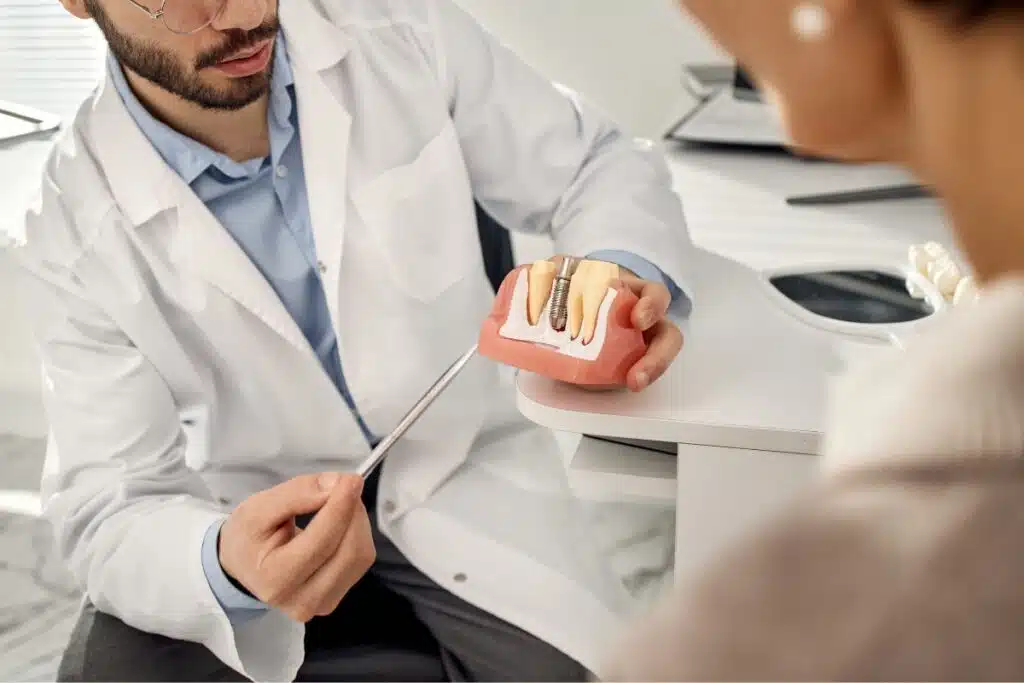
Most people stop thinking about their dental implant once it settles in—and that’s usually a good sign. It means everything feels normal. You can eat, talk, and smile without giving it a second thought.
But every now and then, something feels a little different.
It might not be obvious. Maybe your gums feel slightly tender when you brush. Maybe there’s a bit of swelling that doesn’t fully go away. These are easy things to ignore, especially when life gets busy. Still, they can sometimes point to a dental implant infection, and catching that early matters more than most people realize.
Let’s Talk About What “Infection” Really Means Here
When people hear the word infection, they often imagine something sudden or severe. With dental implants, it’s usually the opposite.
What happens instead is gradual.
Bacteria collect around the edge of the implant—right where it meets the gum. If that area isn’t cleaned well enough over time, the gums can become irritated. That irritation can slowly turn into inflammation. In more advanced stages, this condition is known as peri-implantitis, where both the gums and the supporting bone are affected.
It’s not dramatic in the beginning. That’s exactly why it’s often missed.
Is This Something Common?
Not really. Dental implants are known for being reliable, and most people never run into this issue.
That said, no dental treatment comes with a zero-risk guarantee. A small number of people do experience implant complications, especially when certain factors are involved.
Some of those include:
- Inconsistent cleaning habits
- Smoking
- Past gum problems
- Health conditions that affect healing
Even environmental factors—like dry air in North Salt Lake, UT—can sometimes make gum tissues feel more sensitive, which can make early symptoms more noticeable.
The Signs Are Often Subtle
This is where things get tricky. The early signs don’t usually feel urgent.
They’re quiet, easy to dismiss, and often brushed off as “nothing serious.”
A Slight Change in Feeling
Many people describe it as something just feeling different. Not painful—just not quite the same as before.
Swelling That Comes and Goes
Instead of constant swelling, it may appear, settle, and then return again.
Mild Pain That Doesn’t Follow a Pattern
It might show up while chewing one day and disappear the next.
Gums That Look a Bit Different
A small change in color or texture can be one of the earliest visible signs.
An Unpleasant Taste That Lingers
This can happen when bacteria remain around the implant area.
What’s Going On Beneath the Surface?
Your body is always responding to what’s happening in your mouth.
When bacteria stay around too long, your immune system reacts. At first, it’s just the gums trying to protect themselves. But if the situation continues, that response can reach deeper layers, including the bone.
This is why early attention matters. Once bone is involved, the situation becomes more complicated—not impossible to treat, but definitely more involved.
Why People Delay Getting It Checked
It’s rarely because someone doesn’t care.
More often, it’s because the symptoms don’t seem urgent.
You might think:
- “It’s probably temporary.”
- “It doesn’t hurt that much.”
- “I’ll wait and see if it goes away.”
That waiting period is where small problems get the chance to grow.
If you ever find yourself casually searching for a dentist near me but not following through, that hesitation is very common—but acting sooner usually makes things easier.
Simple Habits That Make a Big Difference
You don’t need anything complicated to keep your implant in good shape.
Most of the time, it comes down to being consistent and a little more mindful.
Slow Down Your Routine
Brushing quickly often means missing the area around the implant.
Clean Between Teeth Regularly
That’s where buildup tends to stay unnoticed.
Notice Changes Early
If something feels different, even slightly, it’s worth paying attention to.
Keep Up With Check-Ups
These visits often catch what you can’t see or feel yet.
A Local Perspective: North Salt Lake, UT
In North Salt Lake, people tend to juggle work, family, and outdoor life. It’s easy for small health concerns to fall lower on the priority list.
But dental changes rarely fix themselves.
What feels minor today can slowly become more noticeable over time. The benefit of addressing it early is that solutions are usually simpler and less time-consuming.
When Should You Take Action?
You don’t need a major symptom to justify a visit.
It’s enough to reach out if:
- Something feels different than it used to
- Swelling doesn’t fully settle
- Pain keeps returning without a clear reason
- Your gums don’t look the same
If the thought of finding a dentist near you has already crossed your mind, it’s probably a good moment to go ahead and schedule an appointment and get a clear answer.
Frequently Asked Questions
Can this happen long after the implant is placed?
Yes, it can develop gradually over time, even after the area has healed.
Does discomfort always mean infection?
Not always, but ongoing or unusual discomfort should be checked.
What is peri-implantitis?
It’s inflammation around an implant that can affect both gum and bone if not managed.
Are these problems common?
They’re not very common, but they do happen in some cases.
What’s the safest approach if unsure?
Have it looked at. Early checks prevent bigger concerns later.
Final Thoughts
Dental implants are meant to feel like part of you—and most of the time, they do. But when something changes, even in a small way, it’s worth noticing.
A little swelling, mild pain, or a change in how things feel may not seem urgent, but they’re often the earliest signals your body gives you.
Listening to those signals early can save you from more complicated treatment later.
If you’re unsure, start simple. Look up a dentist near you, take that step, and schedule an appointment. Sometimes, peace of mind is reason enough.