
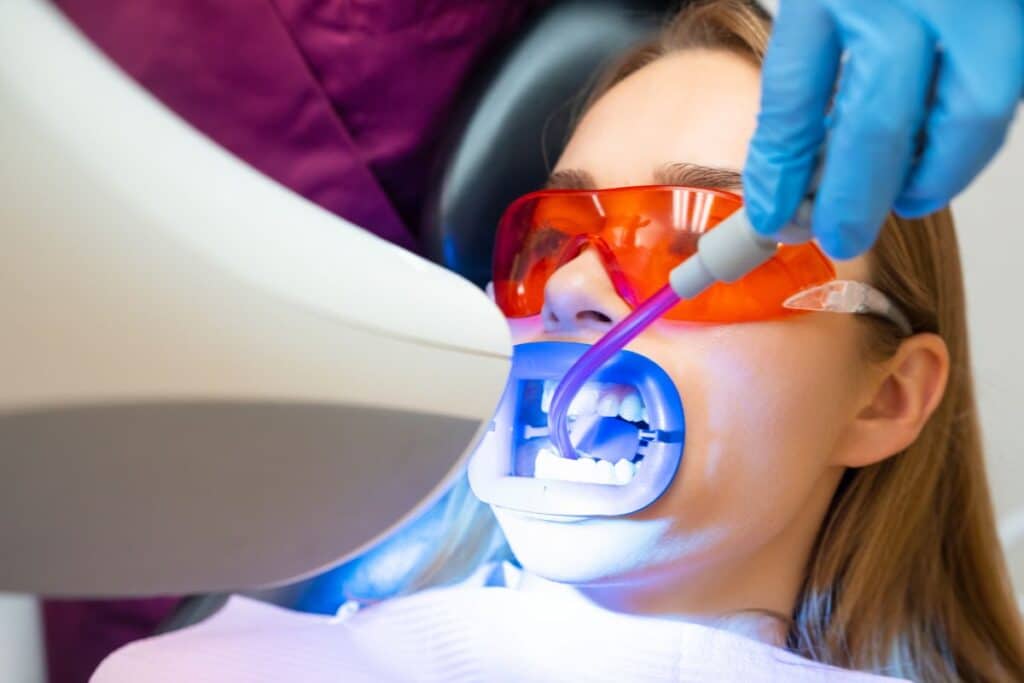
Cosmetically, it is one of the most popular dental treatments currently available. It provides a fast and effective way to whiten your teeth to brighten up your smile and make you feel more confident. However, one great question that many folks have is whether it hurts the sensitivity of their teeth. At North Salt Lake Dental, we often address this question and provide clarity to our patients. In this blog, we will discuss how teeth whitening works, why it might lead to sensitivity, and what you can do to minimize discomfort during the process.
What Is Teeth Whitening?
The goal of teeth whitening is to remove stains and discolorations from your teeth in order to make them appear lighter. There are different methods available, including professional in-office treatments and at-home kits prescribed by a dentist. The most effective option is usually an in-office treatment performed by a dentist in North Salt Lake, which uses stronger whitening agents and delivers faster, more noticeable results.
Why Does Teeth Whitening Cause Sensitivity?
The primary cause of sensitivity during or after teeth whitening is the whitening agent itself. The principal components of most whitening solutions are hydrogen peroxide and carbamide peroxide, which pierce the enamel to remove stains. These chemicals work well, but they can also momentarily cause the enamel’s pores to open, revealing the dentin layer underneath. Sensitivity may arise when the small tubules in the dentin that connect to the teeth’s nerve endings are exposed.
Factors That Influence Sensitivity
- Concentration of Whitening Agent
Higher concentrations of peroxide can provide faster results, but they are also more likely to cause sensitivity. Professional teeth whitening in North Salt Lake often uses higher concentrations under controlled conditions, reducing the risk while maximizing effectiveness. - Condition of Your Teeth
Individuals with thin enamel, gum recession, or pre-existing sensitivity are more prone to experiencing discomfort during teeth whitening. It’s essential to inform your dentist about any sensitivity issues before starting the treatment so they can adjust the concentration and approach accordingly. - Method of Whitening
In-office treatments, though highly effective, may cause temporary sensitivity because of the strength of the agents used. At-home whitening kits prescribed by a dentist generally use a lower concentration of peroxide, reducing the risk but requiring more applications to achieve the same results. Your dentist will recommend the best option based on your individual needs and the condition of your teeth.
How Long Does Sensitivity Last?
The sensitivity associated with teeth whitening is usually temporary. Most people experience discomfort for a few hours to a couple of days after the treatment. In some cases, it can persist for up to a week, but this is uncommon. If sensitivity lasts longer or becomes severe, it’s essential to consult your dentist to rule out any other underlying issues.
Tips to Reduce Sensitivity During Teeth Whitening
1. Use Desensitizing Toothpaste
Desensitizing toothpaste is formulated with ingredients like potassium nitrate and fluoride, which help block the tubules in the dentin, reducing sensitivity. Using this type of toothpaste before and after your whitening treatment can help minimize discomfort.
2. Limit Cold or Hot Foods and Drinks
Whitening that is temperature-sensitive may cause some sensitivity to heat or cold. Staying away from hot drinks, cold drinks, and lukewarm foods for at least 24 hours post-treatment should keep any further irritation from arising.
3. Opt for a Professional Whitening Treatment
While over-the-counter products are available, professional teeth whitening in North Salt Lake is designed to minimize sensitivity. During the process, dentists can add protective gels to safeguard your teeth and gums and modify the strength of the whitening chemical.
4. Take Breaks Between Whitening Sessions
Aim to avoid doing consecutive daily sessions if you are using an at-home whitening kit. Between treatments, allowing your teeth to heal can greatly minimize sensitivity and pain.
5. Consult Your Dentist
Speak with a dentist before beginning any teeth-whitening procedure. In order to guarantee that you receive the safest and most successful treatment, a professional evaluation will assist in establishing the best course of action based on your dental history and current oral health.
Although teeth whitening is a safe and efficient approach to improve your smile, some people may experience temporary discomfort as a result. The incidence and severity of sensitivity are dependent on a number of factors, including the whitening agent’s concentration, the technique employed, and the state of your teeth. However, with proper care and the guidance of a dentist in North Salt Lake, you can enjoy a brighter smile while minimizing any discomfort.
If you’re considering teeth whitening and want professional advice, contact North Salt Lake Dental today. Our team will provide a thorough evaluation and customize a treatment plan that suits your needs, ensuring a comfortable and effective experience.