
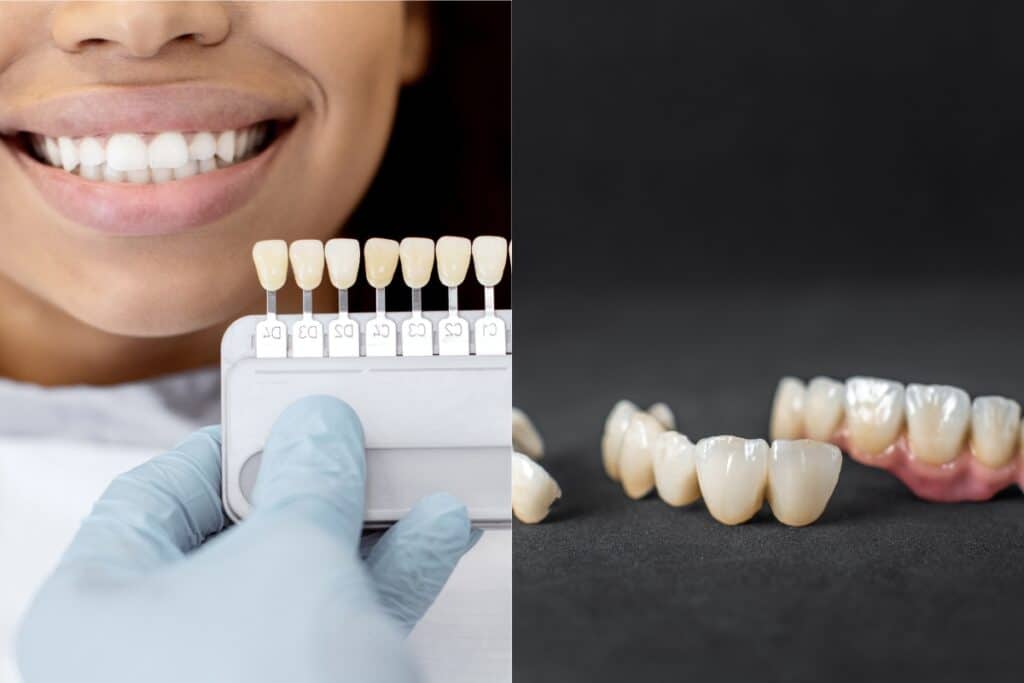
Deciding to fix your smile is a personal step. Maybe you’ve noticed a chipped edge in the mirror, or your teeth don’t look as bright as they used to. Small changes like these can slowly affect how you feel when you talk, laugh, or show your teeth in photos. That’s often when people start looking into veneers vs crowns—two of the most common dental restoration options available today.
At first glance, they might seem similar. Both improve how teeth look, and both are widely used in modern dentistry. But when you look a little closer, the differences in tooth coverage, strength, and cosmetic appeal become clearer—and those differences matter.
Let’s walk through this in a way that feels real, not technical.
What Veneers Actually Do
Veneers are thin layers, usually made of porcelain, that sit on the front side of your teeth. Think of them as a surface upgrade rather than a full repair.
They’re often chosen when the structure of the tooth is still healthy, but the appearance needs attention.
Situations Where Veneers Work Well
- Teeth that have deep stains that don’t lift with whitening
- Slight chips or uneven edges
- Small gaps that don’t require braces
- Teeth that look shorter or worn down
Since veneers only cover the front, they don’t require as much reshaping of your natural tooth. That’s one reason many patients feel comfortable choosing them.
Why People Choose Veneers
The biggest reason is cosmetic appeal. Veneers are designed to mimic natural enamel, so they reflect light in a way that feels real—not artificial. If your goal is a cleaner, more even smile, this option is often discussed during a visit with a cosmetic dentist North Salt Lake.
What Crowns Are Designed For
Crowns take a different approach. Instead of covering just the front, they wrap around the entire tooth like a protective shell.
This makes them less about surface improvement and more about restoring function.
When Crowns Are the Better Choice
- A tooth has a large crack or break
- There’s significant decay
- A root canal has weakened the structure
- The tooth needs support to handle daily pressure
Because crowns provide full tooth coverage, they help hold everything together and reduce the risk of further damage.
Strength You Can Rely On
Crowns are built for durability. They’re often recommended for back teeth or any area that handles strong biting forces. According to the American Dental Association, crowns are a reliable way to protect and preserve teeth that might otherwise be lost.
For many people in North Salt Lake, UT, this added strength is what makes crowns a practical long-term option.
Veneers vs Crowns: The Real Differences
Instead of thinking about which one is “better,” it helps to look at what each one is meant to do.
Coverage
Veneers sit on the front surface. Crowns cover the entire tooth.
If the tooth is mostly intact, veneers may be enough. If it’s weakened, crowns offer more support.
Strength
Veneers are strong for everyday use but are thinner by design.
Crowns are thicker and built to handle more pressure over time.
Appearance
Veneers focus heavily on appearance.
Crowns improve appearance too, but their priority is restoring function.
Tooth Preparation
Veneers require only light reshaping.
Crowns involve more preparation because the tooth needs to fit under the cap.
How Do You Decide?
This is where things become personal. The right option depends on what your teeth need—not just what you prefer.
Veneers Might Be Right If:
- Your teeth are healthy but don’t look the way you want
- You’re focused on improving your smile visually
- You want a more conservative approach
Crowns Might Be Right If:
- Your tooth is damaged or weak
- You need something that will hold up under pressure
- You’re looking for both protection and improvement
A consultation at North Salt Lake Dental can help you sort through this. Many patients say that once they speak with a cosmetic dentist North Salt Lake, the decision becomes much clearer.
A Quick Look at Longevity
Both options are considered dependable, but they serve different timelines depending on care and usage.
- Veneers often last around 10 to 15 years
- Crowns can last 15 to 20 years or longer
- Both have strong success rates when maintained properly
These numbers aren’t guarantees, but they give a general idea of what to expect.
Everyday Life in North Salt Lake, UT
Your environment and habits can influence your choice more than you might think.
For example, drinks like coffee or tea can lead to staining over time, which makes veneers appealing for their ability to maintain a bright appearance. On the other hand, if you grind your teeth or have a more active lifestyle, crowns may offer the durability you need.
This is why working with someone who understands your daily routine—like a cosmetic dentist North Salt Lake—can make a difference in your outcome.
Taking Care of Your Smile After Treatment
No matter which option you choose, maintenance matters.
- Brush twice daily using a gentle toothpaste
- Floss regularly to keep gums healthy
- Avoid using your teeth to open or bite hard items
- Keep up with routine dental visits
Simple habits like these go a long way in protecting your investment.
Final Thoughts
When comparing veneers vs crowns, it really comes down to what your tooth needs most. Veneers are a great option for improving cosmetic appeal, while crowns provide full tooth coverage and added strength when a tooth needs support.
If you’ve been thinking about making a change, taking that first step toward understanding your options can make the process feel much easier. A visit to North Salt Lake Dental can help you move forward with a plan that feels right for you.
Frequently Asked Questions
Do veneers or crowns feel different?
At first, you may notice a slight difference, but most people adjust quickly and forget they’re even there.
Which one is more natural-looking?
Veneers are often preferred for front teeth because of their detailed finish and natural light reflection.
Can a crown replace a veneer later?
In some cases, yes—especially if the tooth becomes damaged and needs more support.
Are these procedures painful?
Most treatments are done with local anesthesia, so you shouldn’t feel pain during the process.
How do I know which one I need?
A proper evaluation is the best way to decide. Your dentist will look at both structure and appearance before recommending a plan.